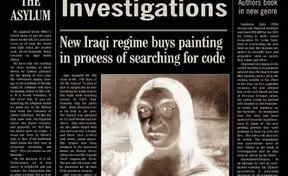
Wittgenstein's Most Beloved Quote Was Real, But It's Fake Now
A serious and good philosophical work could be written consisting entirely of fake philosophy quotes.
Tag
Articles tagged memes.
A serious and good philosophical work could be written consisting entirely of fake philosophy quotes.
Who owns the memes? How dare we ask such a laughable question?
Simon Evnine responds to Vulliamy's recent article on the definition of memes.
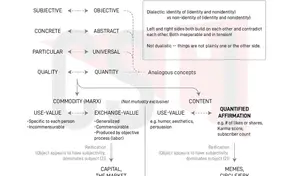
The logic of capitalism is reproduced in online communities as circlejerks, where quantified affirmation supplants monetary profit. Like capitalism, democratized Internet culture is inadequate to its own promise of freedom. Originally published in 2017.
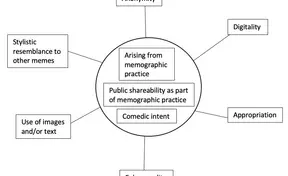
A cluster definition of memes, taking into account memographic practice, comedy, public shareability, use of images and/or text, digitality, appropriation, anonymity, ephemerality and stylistic resemblance to other memes.
GamerGaters were correct in their assessment of gaming culture and the games industry precisely because of the conspiracy theoretical nature of their campaign.
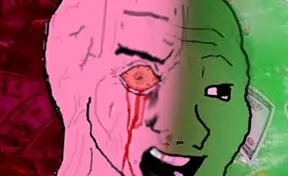
A central theme of post-2015 memecultures was the gamification of memes. This gave rise to Facebook memepages as well as a "meme president". Post-2020 memecultures now struggle with the challenge of the cope, which is an inevitable consequence of creating new games with a loss condition.
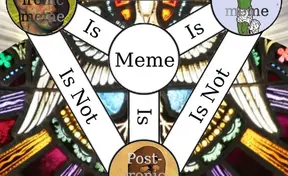
In this article, I explore the new metaphysics of memes that developed throughout the 2010s. I use three distinct perspectives to approach this vast subject matter: time; place; and, process.
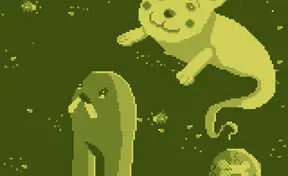
I think of every gondola post as a shrine, for people to come together and appreciate them in a spiritual way.
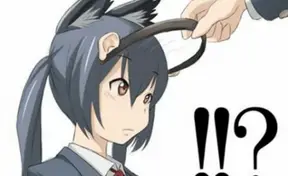
Like a panel in a highly networked version of the Infinite Canvas, every meme is both a potential bottleneck and a possible choice. Since the sense that every meme has a preceding meme is essential to the appreciation of memes, the memetic bottleneck works in the inverse direction of the narrative bottleneck, generating potential pasts. To choose a meme to post is to choose which game to play with the audience. More significantly, it is to choose which save file to load up: it's scenario editing of history, conditioned on current mood.
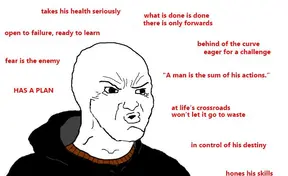
Memes are made by shitposters that live in the meatspace, which makes them affected by human schedules. It's a trivial point, but the schema of memes as semi-independent entities that float around on the sea of the Internet is too popular for this point not to be insightful.
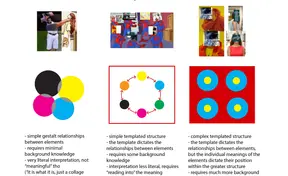
A basic framework for understanding the interplay between visual structure, conceptual organization, visual perception and meaning-making in collage memes that don't contain any text.
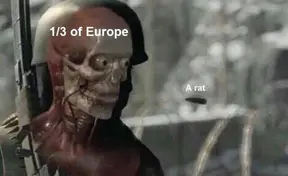
It's a great example of how shaky the definition of 'Internet meme' as 'a funny image or video clip' really is. Are these photos each a meme, or do they compose a single meme through being viewed together?
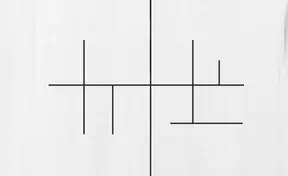
Tracing back techniques used in memes to modern art is a safe bet, because it's only natural that memers will use whatever tools are available to make better memes.
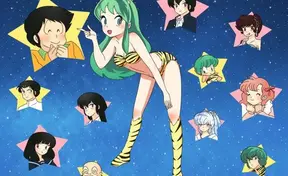
The archetypal online community is specialised in its collective interests, hostile to outsiders, particular about its tastes and difficult for normies to get into. Knowledge and skill, especially when useful for creating relevant content for the community, is highly valued; "otaku" is the Japanese equivalent of the "autist".
The meme means different things to different viewers as a matter of degrees, not a matter of either getting the joke or missing it, or reading it ironically or not.
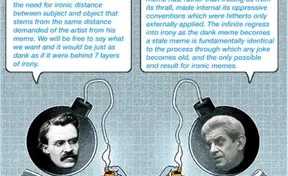
The Ironic Meme Movement was a reaction against the mainstream co-option of the subcultural products of the underground; an attempt to create incorruptible inside jokes. The Ironics employed defensive strategies which paralleled that of the punks against the commercialization of their own subculture. Like the punks, they failed.
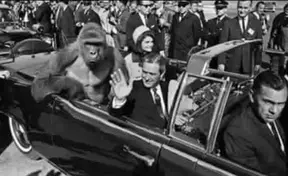
‘R.I.P. Harambe’ no longer means R.I.P. Harambe, but rather, ‘we remember a dead fictional being based off a real dead being inside of a living meme’.
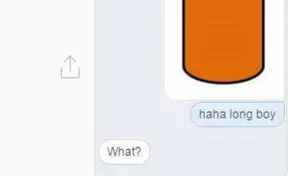
Where have all the Long Boys gone? (Plus an exclusive interview with Special Meme Fresh)
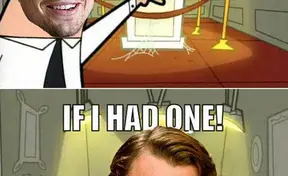
If you have an Internet connection, then you must have noticed how Leonardo DiCaprio’s face and name have infected your computer like some celebratory virus. Everyone is talking about Leo.
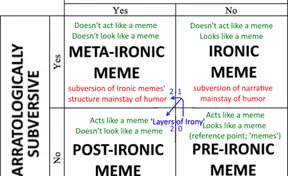
Revised model of the four quadrants model of irony.
A working glossary for ironic meme theory, from normies and autists to meta-irony, normification, and the phylomemetic tree.
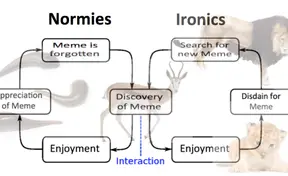
On some parts of the Internet the term ‘normie’ is used to define anyone who does not fully comprehend the humour and language of certain communities. A normie is usually seen as someone who has a social life outside of the Internet, and who does not know, or care, about its obscure customs. In this particular case, the term is as much an accusation as a label, expressing disdain toward anyone who is unaware of the growing community of Ironic memes.
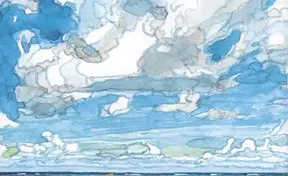
There's a new meme becoming popular in the Anglosphere called Gondola. It's a derivative of Spurdo Sparde with no arms or dialogue, generally walking around in various scenes from classic artworks to everyday life. I think they could be most easily characterized in opposition to Pepe or Spurdo, both of whom are subversive in the classically Ironic Meme style of inappropriateness. Pepe will murder Wojak over and over while Spurdo will spout every satirizable position in misspelled and poorly drawn way possible. As usual, everyone's worry is about how normies will ruin Gondola. Not if or when; it's taken for granted that Gondola will become corrupted.
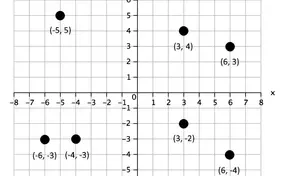
I have been developing a theory of Internet Memes, through which I hope to operationalize memetics for the scientific analysis of Internet Meme culture. Here is a case study I used to test and develop some of my models.
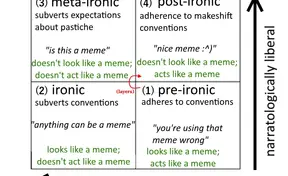
Memes are not just art they are art-concepts, necessarily materialized cybernetically. This means their analysis must always be two-tiered, firstly, memetic; secondly, aesthetic.
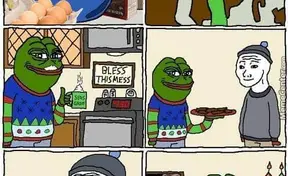
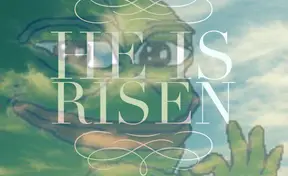
Honestly, I miss this meme. I guarantee that Pepe the Frog is going to become the biggest 'normie' meme of all time. It's popular with high school kids, who are basically the equivalent of university activists in the world of internet culture.
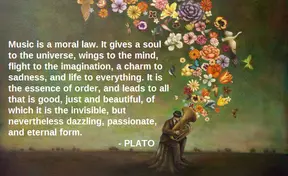
It seems to me that 'quotes' such as these which become canon in the public psyche take on a special kind of force that highlights the close relationship between truth and beauty, as well as the fact that the two are not one and the same--although (I hope you will agree) truth is often beautiful, and there is always some truth in beauty.