Skip to content
  • Articles
  • About
  1. Culture ›
    1. View all Culture
    2. Homesteading the Memeosphere
    3. GME Frenzy Hints At the New Stage of Memecultures
    4. All Memes Are From the Future
    5. The New Year's Memes
    6. Moe to Memes, Otaku to Autists
    7. Trash Dove Is A Normie Meme
    8. Newfriends and the Generation Gap
    9. A Short Note On the Death of Pepe
  2. Metamemetics ›
    1. View all Metamemetics
    2. Memes and Humor: Reply to Claudia Vulliamy's "What is a Meme?"
    3. What Is A Meme?
    4. The Memeticist's Challenge Remains Open
    5. Internet Memetics
    6. Glossary 1.0
  3. Aesthetics ›
    1. View all Aesthetics
    2. We Can Have Retrieval-Inference Synthesis
    3. Every Gondola Is a Shrine
    4. Structure and Content in Drake-Style Templates
    5. Memes, Jokes & Visual Puns
    6. The Interpretation of Memes
    7. The design of a platform determines the kind of content produced
    8. Kandinsky and Loss
    9. A Short Note On Gondola
    10. The Artist-Philosopher Manifesto
  4. Irony ›
    1. View all Irony
    2. When You Drink [water]
    3. Defining ‘Normie’, ‘Casual’, ‘Ironist’ and ‘Autist’ In Internet Subcultures
    4. Post-Irony against Meta-Irony
    5. The Revised Quadrant Model
    6. The Ironic Normie
    7. Bane, Loss and Phylogeny
    8. The Quadrant System for the Categorization of Internet Memes
  5. Game Studies ›
    1. View all Game Studies
    2. GamerGate As Metagaming
    3. The Memetic Bottleneck
    4. Memes Are Not Jokes, They Are Diagram-Games
    5. Twitch Plays Pokemon, the Meme Scene, & the Project of Hyperspace
    6. Hotline Miami and player complicity
    7. Undertale Review
  6. History ›
    1. View all History
    2. Wittgenstein's Most Beloved Quote Was Real, But It's Fake Now
    3. 2010's Decade Review, Part 2: Memetaphysics Through Three Lenses
    4. Jjalbang (짤방), the Korean Meme
    5. 2010's Decade Review, Part 1: The Origin of 2010's Memecultures
    6. Know Your Meme: Magibon
    7. The Meta-Ironic Era
    8. Facebook Groups
    9. From Outrage to Dicks Out to Dead Celebrity: The Evolution of the Great Ape Harambe
    10. long boys never grow up
    11. Death of a Meme?
    12. A Golden Age of Meme Pages and the Microcosm of Art History
    13. Misattributed Plato Quote Is Real Now
  7. Philosophy ›
    1. View all Philosophy
    2. Postnaturalism
    3. How to Digitally Coauthor Articles In Philosophy Class
    4. A School of Internet Philosophy
    5. An Internet Koan
  8. Politics ›
    1. View all Politics
    2. On Circlejerk
    3. A Tale of Two Healthcare Narratives
    4. The Structures of Hyperspatial Politics
    5. President Park's Corruption Cult
    6. On Vectoralism & the Meme Alliance's General Strike
    7. Creeps, Tweeps, & the Limits of Social Media Freedom
    8. See the Problem?
    9. The Post-Pepe Manifesto
The Philosopher's Meme
  • Articles
  • About
Support UsPatreon
  • Culture
    1. Homesteading the Memeosphere

      Who owns the memes? How dare we ask such a laughable question?

    2. GME Frenzy Hints At the New Stage of Memecultures

      A central theme of post-2015 memecultures was the gamification of memes. This gave rise to Facebook memepages as well as a "meme president". Post-2020 memecultures now struggle with the challenge of the cope, which is an inevitable consequence of creating new games with a loss condition.

    3. All Memes Are From the Future

      All memes are from the future: the literate memer anticipates that the meme will spread and change in meaning depending on where it gets reposted.

    View all Culture
  • Metamemetics
    1. Memes and Humor: Reply to Claudia Vulliamy's "What is a Meme?"

      Simon Evnine responds to Vulliamy's recent article on the definition of memes.

    2. What Is A Meme?

      A cluster definition of memes, taking into account memographic practice, comedy, public shareability, use of images and/or text, digitality, appropriation, anonymity, ephemerality and stylistic resemblance to other memes.

    3. The Memeticist's Challenge Remains Open

      Seong's thesis on the memeticist's challenge (2018). Supervised by Diane Proudfoot and Douglas Campbell, and completed at the University of Canterbury.

    View all Metamemetics
  • Aesthetics
    1. We Can Have Retrieval-Inference Synthesis

      A Modern Synthesis of art criticism is possible.

    2. Every Gondola Is a Shrine

      I think of every gondola post as a shrine, for people to come together and appreciate them in a spiritual way.

    3. Structure and Content in Drake-Style Templates

      Two dimensions stand out that make the two templates the same: 1. the structure (aversion/affirmation) 2. the content (rappers in music videos)

    View all Aesthetics
  • Irony
    1. When You Drink [water]

      Post-ironic memes are great because they are meaningful. Meaningful memes bring us closer to the dream of the timeless meme, just like early comics artists who aspired towards serious literature with an ostensibly unserious medium.

    2. Defining ‘Normie’, ‘Casual’, ‘Ironist’ and ‘Autist’ In Internet Subcultures

      The following is my take on doing the same for online subcultures. I do this by clarifying the definitions of three highly popular terms used on the Internet to describe different kinds of subcultural participants, and clarifying the concept of the ironist in the context of online subcultures.

    3. Post-Irony against Meta-Irony

      The Ironic Meme Movement was a reaction against the mainstream co-option of the subcultural products of the underground; an attempt to create incorruptible inside jokes. The Ironics employed defensive strategies which paralleled that of the punks against the commercialization of their own subculture. Like the punks, they failed.

    View all Irony
  • Game Studies
    1. GamerGate As Metagaming

      GamerGaters were correct in their assessment of gaming culture and the games industry precisely because of the conspiracy theoretical nature of their campaign.

    2. The Memetic Bottleneck

      Like a panel in a highly networked version of the Infinite Canvas, every meme is both a potential bottleneck and a possible choice. Since the sense that every meme has a preceding meme is essential to the appreciation of memes, the memetic bottleneck works in the inverse direction of the narrative bottleneck, generating potential pasts. To choose a meme to post is to choose which game to play with the audience. More significantly, it is to choose which save file to load up: it's scenario editing of history, conditioned on current mood.

    3. Memes Are Not Jokes, They Are Diagram-Games

      The meme means different things to different viewers as a matter of degrees, not a matter of either getting the joke or missing it, or reading it ironically or not.

    View all Game Studies
  • History
    1. Wittgenstein's Most Beloved Quote Was Real, But It's Fake Now

      A serious and good philosophical work could be written consisting entirely of fake philosophy quotes.

    2. 2010's Decade Review, Part 2: Memetaphysics Through Three Lenses

      In this article, I explore the new metaphysics of memes that developed throughout the 2010s. I use three distinct perspectives to approach this vast subject matter: time; place; and, process.

    3. Jjalbang (짤방), the Korean Meme

      Fundamental Concepts In International Meme Studies: Jjalbang, the Korean Meme

    View all History
  • Philosophy
    1. Postnaturalism

      All technology exerts some epistemic influence on the observer, and this is often epistemologically relevant; the proper function of philosophy is to study the epistemic effect of technology, and to design and produce epistemically useful technology; localised agreements rather than shared beliefs, entailed by the use of common technology, are sufficient foundations for philosophical discourse.

    2. How to Digitally Coauthor Articles In Philosophy Class

      A group assignment activity for philosophy students at the undergraduate level, which can be applied in tandem with existing curricula. Consists of a way to standardise the work of each individual student such that each student’s contributions to the group assignment fits in seamlessly with the other team members’ contributions, and a way to apply the system to the specific course material being assessed.

    3. A School of Internet Philosophy

      I think there's a school of ‘Internet philosophy’ like there is continental philosophy or Anglo-American philosophy, with its own dominant interests and a unique style of discourse. I'm trying to figure out what this consists of. It's a combination of demographics, dominant areas of interest (both within and without strict philosophy) and conventions and canons unique to the school.

    View all Philosophy
  • Politics
    1. On Circlejerk

      The logic of capitalism is reproduced in online communities as circlejerks, where quantified affirmation supplants monetary profit. Like capitalism, democratized Internet culture is inadequate to its own promise of freedom. Originally published in 2017.

    2. A Tale of Two Healthcare Narratives

      Some conservatives claim that the free market saved Korea from COVID-19. I argue that it was Korea's Confucian democracy and technological environment that helped them contain the pandemic, not the lack of supply side regulation.

    3. The Structures of Hyperspatial Politics

      Sites of content production in Web 2.0 are strategic assets which make up the terrain of political conflict in hyperspace.

    View all Politics

Author

Isaac van Bakel

1 article

Articles by Isaac van Bakel

  1. History March 22, 2016

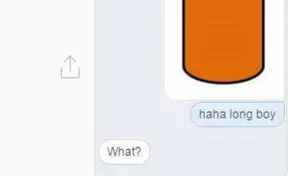
    long boys never grow up

    Where have all the Long Boys gone? (Plus an exclusive interview with Special Meme Fresh)

    Isaac van Bakel & Ulysses King

The Philosopher's Meme

The philosophy of memes, cyberculture, and the Internet.

  • Articles
  • Archive
  • Collections
  • Announcements
  • Featured Articles
  • Authors
  • Tags
  • Site Bibliography
  • About
  • RSS
  • Culture
  • Metamemetics
  • Aesthetics
  • Irony
  • Game Studies
  • History
  • Philosophy
  • Politics
Support Our Research